


Pilot scope. A global payments network scoped reconciliation and dispute workflows for a 30-day pilot. This page sets out how that pilot is chartered. The checks below are planned acceptance tests, not achieved results, and no pilot outcome is reported.
A reconciliation pilot is only useful if everyone agrees, before it starts, what counts as a match, who owns each kind of exception and what the pilot must prove by day 30. This charter fixes those three things first.
The starting problem
Settlement records, ledger entries and dispute cases describe the same money in different systems, at different times and with different identifiers. Clear matches are closed by hand, unclear ones wait in shared spreadsheets, and a dispute raised against a transaction can sit in a separate queue from the reconciliation break it explains. The pilot’s job is to put each break in front of one owner with the evidence attached.
Matching rules
The rules are written and versioned before any data is replayed.
- Clear match: transaction reference, currency, amount and status agree within the declared settlement window. BergAuto closes it and records the rule that matched.
- Tolerance match: everything agrees except a difference inside an agreed fee or rounding tolerance. Closed, with the difference recorded.
- Break: any other difference, a missing counterpart after the window closes, a reused reference or a duplicate event. Opened as an exception in BergFlow.
- Linked dispute: a break that has an open dispute on the same transaction is routed to the dispute owner, not closed as a reconciliation item.
A confidence score can order the queue. It cannot make up for a missing source fact.
Exception ownership
| Exception | Owner | Evidence shown |
|---|---|---|
| Amount or status break | Reconciliation analyst | Settlement line, ledger entry, failed rule |
| Missing counterpart | Reconciliation analyst | Source record, window, arrival log |
| Break with an open dispute | Dispute owner | Both records, dispute case and its stage |
| Correction above the agreed limit | Named finance approver | Proposed correction and its effect |
One sample mismatch
Worked scenario. The record and amounts are invented for illustration.
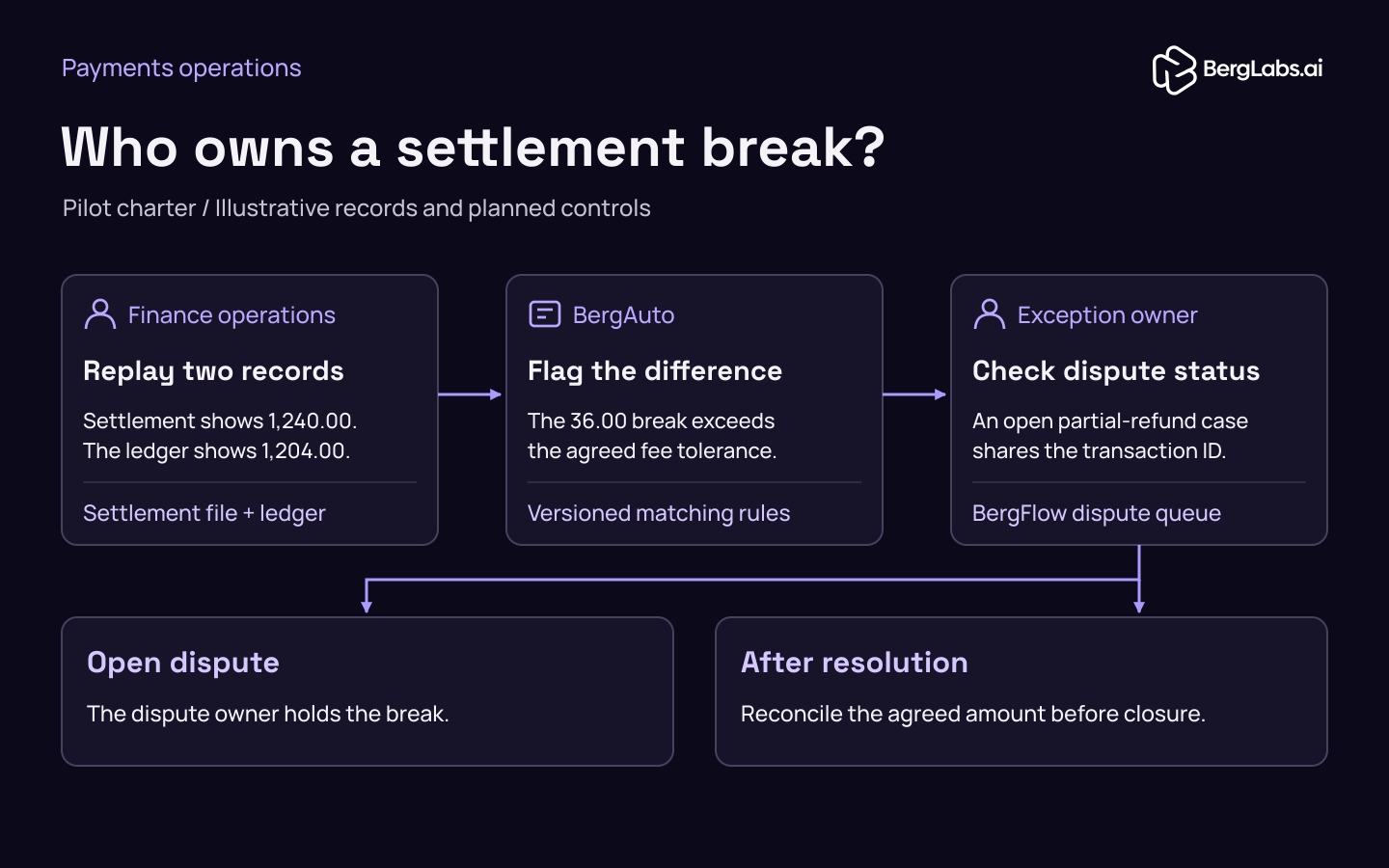
The settlement file shows reference TX-48210 settled at 1,240.00. The ledger holds the same reference at 1,204.00. Currency and status agree; the 36.00 difference is outside the fee tolerance, so the matcher opens a break. A dispute was raised on TX-48210 two days earlier for a partial refund. The workflow therefore routes the item to the dispute owner, who sees both records and the dispute case together. The decision recorded is “hold pending dispute outcome”: no correction is written, and the break closes only when the dispute resolves and the ledger reflects the agreed amount.
Deliverables
- A versioned matching-rule set agreed with finance.
- One exception queue with an owner, evidence and age on every item.
- A replay of a closed settlement period against the rules.
- A decision log covering every hold, correction and close.
- A day-30 readout against the acceptance tests below.
Planned acceptance tests
- Replay of the closed period: every clear match closed by the rules is confirmed by an audit sample.
- Every open break has exactly one owner and its source evidence attached.
- Every break with an open dispute reaches the dispute owner rather than closing as a reconciliation item.
- A retried correction cannot create a second ledger entry.
- Finance signs off the rule set and the queue before any correction is automated.
These tests describe what the pilot must demonstrate. Results will be published only once a signed readout exists.
