


AI catalogue generation should draft from an evidence-backed product record and keep every material attribute traceable to its source. A reviewer confirms facts, regulated claims and image-text conflicts before publication. Fluency cannot establish that a product feature exists.
Example workflow only, not evidence of a live deployment. BergLabs has published results in related seller-quality case studies, but those results do not measure this AI catalogue-generation design.
The operating problem
Generated listings can be fluent and wrong. Product facts must come from seller evidence, packaging, verified attributes or authorised databases, and conflicts need a visible review path.
How the workflow works
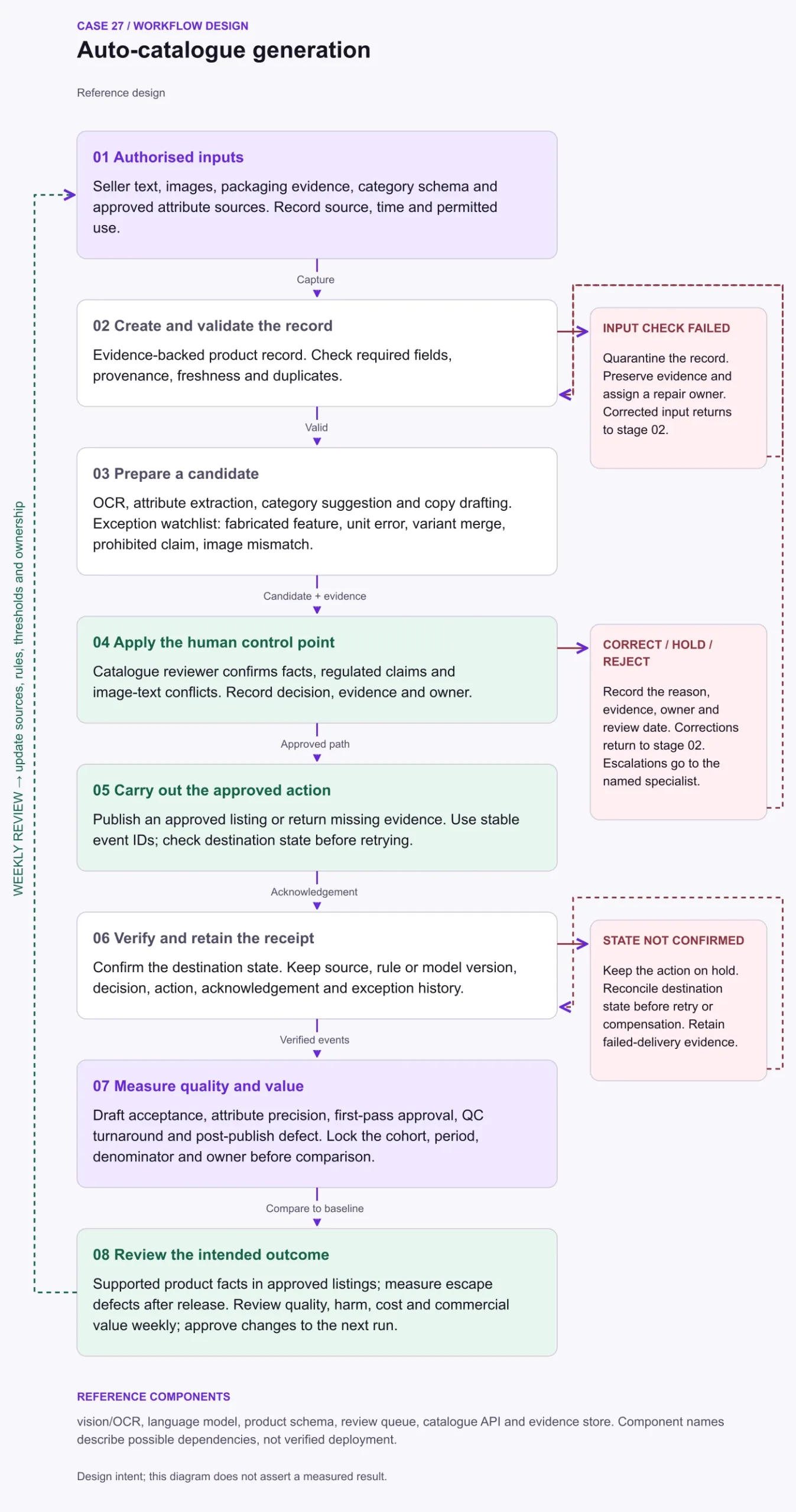
Extract candidate attributes from seller evidence, packaging and approved databases, then resolve the product variant and category schema. Store units explicitly and distinguish unknown values from confirmed absence. Generate the description only from accepted facts, with evidence available beside the draft. This separates fact collection from wording and makes review more precise.
Where review and controls matter
Conflicting packaging and seller text need a correction or evidence request. Variant merges, unit errors and prohibited claims must block approval of the affected listing. A reviewer can edit phrasing, but new product facts require a source. After an authorised publish action, sample the live listing against the approved record to catch formatting changes and escaped errors.
Risk reference: NIST AI RMF.
What to measure
These are proposed checks, not results already measured. Choose the listings and dates to include before you count. For each percentage, count only eligible items in that group. If you audit a sample, use the same sample for both parts of the calculation. Record where the data came from, what you left out, who owns the measure, and what you could not track.
| Measure | Definition and unit |
|---|---|
| Draft acceptance | Drafts accepted without substantive factual or structural correction divided by reviewed drafts; percent. |
| Attribute precision | Generated or extracted attribute values supported by authoritative product evidence divided by audited values; percent. |
| First-pass approval | Listings approved without a return to the seller divided by first submissions; percent. |
| QC turnaround | Time from review-ready draft to final quality decision; median and p90 hours. |
| Post-publish defect | Published listings with confirmed factual or policy defects divided by audited published listings; percent. |
Common questions
How should AI-generated catalogue copy be checked?
Compare each product claim with an authorised source, such as current packaging, seller documentation or an approved product database. A reviewer resolves conflicts and blocks claims the evidence does not support.
What if the source does not confirm a product feature?
Leave the value unknown and request evidence. Do not ask the model to fill the gap by guessing.
How can a team measure catalogue-generation quality?
Track supported product attributes, drafts accepted without substantive correction, first-pass approvals, review time and confirmed defects after publication. These are proposed measures; report actual results only after collecting them.
A useful first pilot
Choose one product category with a fixed attribute schema. Evaluate drafts against packaging and seller evidence, including missing values, variant conflicts and unit conversions. Track accepted factual accuracy before testing copy performance.
Bring the workflow, its source records and the decision that needs an owner to a BergLabs pilot discussion.
