


Speed-to-lead automation should resolve identity, consent and ownership before creating a response. A single lead-intent record prevents forms, chat and event triggers from producing duplicate outreach, while an accepted owner and a visible response deadline keep the handoff accountable.
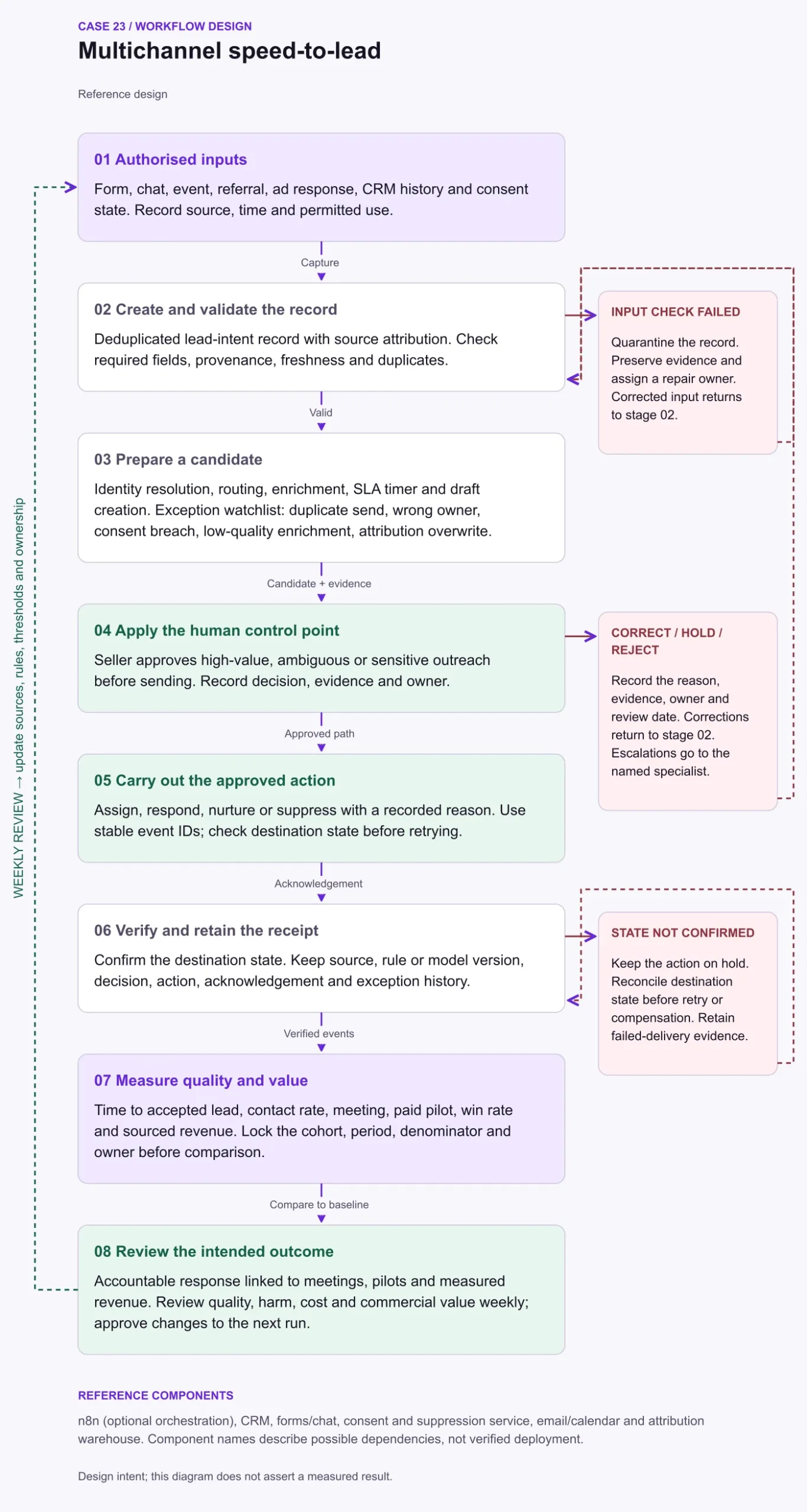
Composite reference architecture. A reference RevOps workflow; no meeting, pipeline or revenue result is asserted.
The operating problem
A fast response is valuable only when the person, account, intent, consent and owner are correct. Duplicated triggers turn one signal into several conflicting messages.
How the workflow works
Deduplicate incoming forms, chat enquiries, referrals and campaign responses against CRM history. Preserve the original source and the new intent event instead of overwriting attribution. Route the lead to an owner with a stated acceptance deadline, prepare relevant context and a draft, and check suppression status again before any authorised send.

Where review and controls matter
Ambiguous identity, conflicting owners and sensitive requests need seller review. Retries should reuse the intent-event identity so a slow acknowledgement does not cause several messages. A lead that is suppressed or awaiting consent has a valid recorded state, even if no response is sent. Meetings and revenue should be joined to the cohort using an explicit attribution rule.
Risk reference: NIST AI RMF.
What to measure
Use a fixed cohort and measurement window. Count numerator events only within the denominator's eligible cohort; sampled measures use the same audit sample for both terms. Record the source, exclusions and owner, and keep missing data visible. These definitions are proposed measurement contracts, not observed results.
| Measure | Definition and unit |
|---|---|
| Time to accepted lead | Time from eligible intent event to confirmed owner acceptance; median and p90 minutes. |
| Contact rate | Eligible leads with a verified two-way interaction divided by eligible leads; percent. Report attempted sends separately. |
| Meetings | Count of attended, qualified meetings linked to the lead cohort within the declared window. |
| Paid pilots | Count and contracted value of paid pilots attributed to the cohort; exclude tentative interest. |
| Win rate | Closed-won opportunities divided by closed-won plus closed-lost opportunities in the cohort; percent. |
| Sourced revenue | Recognised revenue first sourced by the workflow under the declared attribution rule; currency and period. |
A useful first pilot
Follow one inbound channel through CRM assignment, owner acceptance and approved response. Include duplicate submissions and an existing suppressed contact, then verify both the CRM record and the communication state.
Bring the workflow, its source records and the decision that needs an owner to a BergLabs pilot discussion.
