


An embedded delivery pod gives a workflow one operating backlog, a named business owner and a regular review of exceptions, releases and outcomes. Its value comes from resolving ownership gaps and improving measured service performance, rather than counting automation activity.
Composite reference architecture. An operating blueprint; it does not imply an unnamed client purchased or completed the engagement.
The operating problem
Automation ownership fragments across business, engineering and vendors. Exceptions then sit between teams, changes bypass evaluation and leadership sees activity without a reliable outcome chain.
How the workflow works
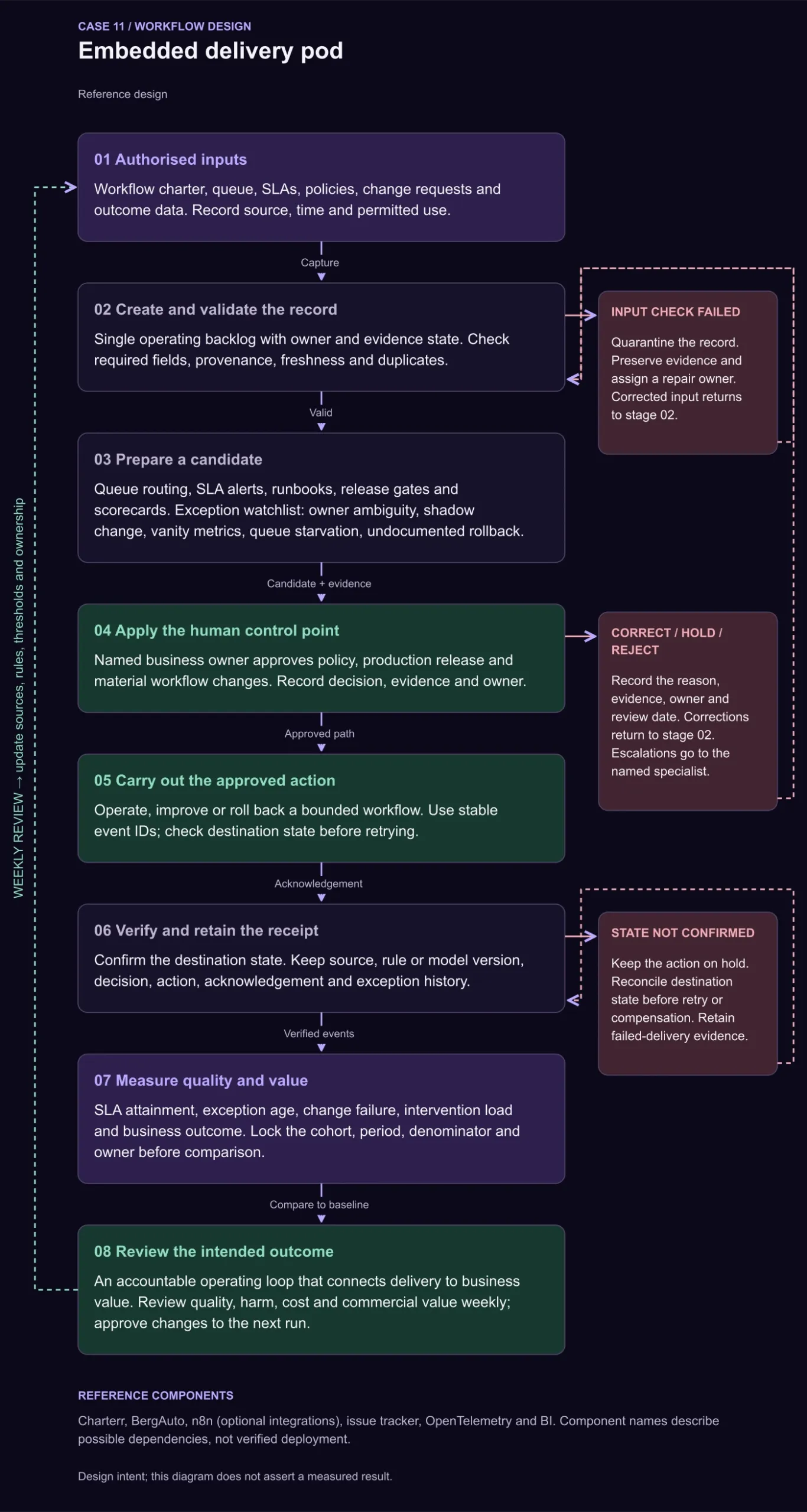
The workflow charter defines demand, service deadlines, policy boundaries and the destination result. The pod keeps delivery work, incidents and changes in one backlog with an owner and evidence state. Queue routing and alerts can prepare the next action; the business owner approves material policy changes and production releases.

Where review and controls matter
An overdue exception needs a named escalation and a next decision date. Releases should carry evaluation results and a workable rollback path. When a scorecard shows faster throughput, compare defects, intervention load and the chosen business result before accepting it as progress. Charterr and BergAuto are reference components here; this blueprint does not assert a purchased engagement or completed client rollout.
Risk reference: NIST AI RMF.
What to measure
Use a fixed cohort and measurement window. Count numerator events only within the denominator's eligible cohort; sampled measures use the same audit sample for both terms. Record the source, exclusions and owner, and keep missing data visible. These definitions are proposed measurement contracts, not observed results.
| Measure | Definition and unit |
|---|---|
| SLA attainment | Work items completed within their service deadline divided by items due; percent. |
| Exception age | Time since creation for open exceptions at the reporting cutoff; median and p90 hours or days. |
| Change failure | Released changes causing an incident, rollback or urgent correction divided by released changes; percent. |
| Intervention load | Unplanned human handling time attributable to the workflow per completed unit; minutes per unit. |
| Business outcome | The workflow's declared downstream event or value, joined to the operating cohort. State the unit and attribution method before setting a target. |
A useful first pilot
Take one recurring workflow with an existing queue and a business owner. Run the operating cadence through an incident, a policy exception and a reversible change, then verify each terminal state with the destination team.
Bring the workflow, its source records and the decision that needs an owner to a BergLabs pilot discussion.
