30% Faster Delivery at 15% Lower Cost: Transforming Enterprise Data Annotation
30%
Faster turnaround time
15%
Cost savings per project
96%
Consistent accuracy maintained
Industry
Data Services / AI Training Data
Scale
1,000+ annotators, 50M+ annotations annually
About the Client
A leading enterprise data annotation provider serving Fortune 500 companies building computer vision, NLP, and multimodal AI systems. The company had built its reputation on high-accuracy human labeling but was facing margin pressure as clients demanded faster turnaround at lower costs-while competitors introduced AI-assisted tooling.
Challenge
The company's fully manual annotation model had become unsustainable in an increasingly competitive market:
Labor-Intensive Operations Driving High Costs: With 1,000+ annotators across three global centers, labor represented 70% of project costs. Every annotation required human attention from start to finish. Infrastructure and management overhead consumed another 20%, leaving thin margins.
Human-Only Labeling Led to Inconsistency: Despite rigorous training programs, accuracy varied significantly across annotator teams and shifts. A project might achieve 98% accuracy in week one and drop to 93% by week three.
Manual Throughput Couldn't Scale: When clients submitted urgent datasets, the only option was overtime and weekend shifts. Scaling beyond 30% surge capacity was impossible without months of hiring and training.
Quality-Speed Tradeoff Was Zero-Sum: Faster delivery meant cutting QC passes, which hurt accuracy. Higher accuracy meant slower delivery.
Competitive Pressure from AI-First Entrants: New market entrants were offering "AI-assisted annotation" at 40% lower price points, and the company was losing RFPs on cost.
Our Approach
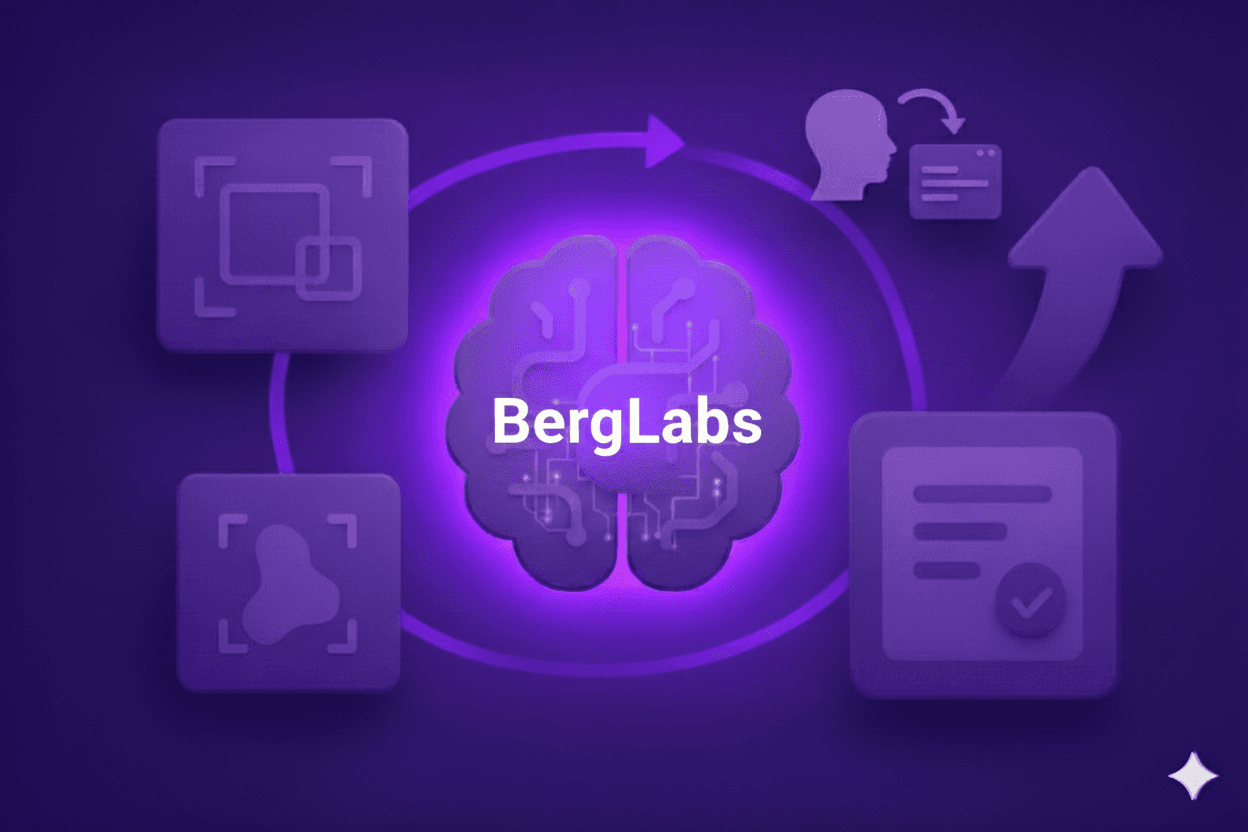
BergLabs designed and implemented a hybrid AI-human pipeline that preserved the company's quality reputation while dramatically improving economics.
Hybrid Pipeline Architecture
AI-driven pre-annotation with human validation and refinement.
- AI-Driven Pre-Annotation: Instead of starting from blank frames, annotators received AI-generated initial annotations as a starting point. For object detection tasks, bounding boxes were pre-drawn; for segmentation, polygon approximations were provided; for text annotation, entity spans were pre-highlighted. This transformed the annotator's role from "creator" to "validator and refiner."
- Confidence-Based Routing: Not all data points require the same level of attention. AI confidence >95% was auto-approved, 85-95% received light review, 70-85% received standard review, and <70% required full human annotation from scratch. This tiered approach concentrated human effort on genuinely difficult cases.
AI Confidence Scoring Implementation
Calibrated confidence thresholds and edge case detection.
- Calibrated Confidence Thresholds: We calibrated thresholds against held-out validation sets for each project type rather than trusting raw model confidence scores, which are notoriously overconfident.
- Dynamic Threshold Adjustment: As annotators corrected AI predictions, we tracked correction rates by confidence band and automatically adjusted thresholds to maintain accuracy guarantees while maximizing automation.
- Edge Case Detection: We trained separate models to identify unusual object sizes, rare class combinations, ambiguous boundaries, and low image quality-routing these to senior annotators regardless of raw confidence scores.
Continuous Learning Loop
Feedback-driven model improvement for continuous efficiency gains.
- Verified Annotations Feed Model Training: Every human-verified annotation was captured as training data for the pre-annotation models. Projects that started at 40% automation often reached 70%+ by completion as models learned project-specific patterns.
- Active Learning for Edge Cases: The system identified clusters of cases where AI consistently underperformed and prioritized them for human annotation, improving model accuracy on the long tail faster than random sampling.
- Cross-Project Transfer Learning: Learnings from one client's project improved pre-annotation for similar projects. A model trained on retail product images transferred to e-commerce catalogue annotation.
┌─────────────────────────────────────────────────────────────┐
│                  Client Dataset Input                       │
└─────────────────────────────┬───────────────────────────────┘
                              │
                              ▼
┌─────────────────────────────────────────────────────────────┐
│                AI Pre-Annotation Layer                      │
│                                                             │
│   ┌─────────────┐  ┌─────────────┐  ┌──────────────┐      │
│   │ Detection   │  │ Segmentation│  │Classification│       │
│   │ Model       │  │ Model       │  │ Model        │       │
│   └─────────────┘  └─────────────┘  └──────────────┘       │
│                                                             │
│   ┌─────────────────────────────────────────────┐          │
│   │      Confidence Scoring + Calibration       │          │
│   └─────────────────────────────────────────────┘          │
└─────────────────────────────┬───────────────────────────────┘
                              │
                              ▼
┌─────────────────────────────────────────────────────────────┐
│                Intelligent Routing                          │
│                                                             │
│   High Confidence    Medium Confidence    Low Confidence   │
│      (>95%)              (70-95%)             (<70%)       │
│       │                   │                   │             │
│       ▼                   ▼                   ▼             │
│   ┌────────┐         ┌────────┐         ┌────────┐         │
│   │ Auto   │         │ Human  │         │ Human  │         │
│   │ Approve│         │ Review │         │ Create │         │
│   └────────┘         └────────┘         └────────┘         │
└─────────────────────────────┬───────────────────────────────┘
                              │
                              ▼
┌─────────────────────────────────────────────────────────────┐
│                  QA & Validation                            │
│                                                             │
│   ┌─────────────────────────────────────────────┐          │
│   │   Statistical Sampling (5-10% of output)    │          │
│   └─────────────────────────────────────────────┘          │
│                                                             │
│   ┌─────────────────────────────────────────────┐          │
│   │      Automated Consistency Checks           │          │
│   └─────────────────────────────────────────────┘          │
└─────────────────────────────┬───────────────────────────────┘
                              │
                              ▼
┌─────────────────────────────────────────────────────────────┐
│               Golden Dataset Output                         │
│                 (Client Delivery)                           │
└─────────────────────────────────────────────────────────────┘
                              │
                              │ Feedback Loop
                              ▼
┌─────────────────────────────────────────────────────────────┐
│           Continuous Model Improvement                      │
│                                                             │
│   Verified annotations → Model retraining → Better pre-    │
│   annotation → Higher automation → Lower cost              │
└─────────────────────────────────────────────────────────────┘
Impact
The hybrid pipeline delivered measurable improvements across all key metrics:
| Metric | Before | After | Improvement |
|---|---|---|---|
| Average Annotation Time | 100 hrs/project | 70 hrs/project | 30% faster |
| Cost Per Annotation | $0.15 | $0.13 | 15% savings |
| Accuracy Consistency | 93-98% variance | 95-97% variance | 96% consistent |
| Surge Capacity | 30% max | 100%+ | 3x+ scalability |
| Edge Case Accuracy | 88% | 94% | 6% improvement |
Margin Improvement: Project gross margins improved from 25% to 38%, enabling competitive pricing while maintaining profitability.
Client Satisfaction: Faster turnaround and consistent quality led to 40% increase in repeat business and contract expansions.
Competitive Positioning: The company could now match AI-first competitors on price while maintaining its quality reputation-winning back RFPs previously lost on cost.
Testimonial
“We were skeptical that AI could match our annotators' quality. BergLabs proved us wrong-not by replacing our team, but by making them dramatically more effective. The hybrid model lets us compete on price without sacrificing the accuracy that built our reputation.”
VP of Delivery
Enterprise Data Annotation Provider
Engagement Model
Type
Automation Lab for the Enterprise
Duration
16 weeks implementation + ongoing optimization
Team
5 ML engineers, 2 infrastructure engineers, 1 operations consultant
Platforms
BergForge (AI agent factory), BergFlow (hybrid workflow orchestration)